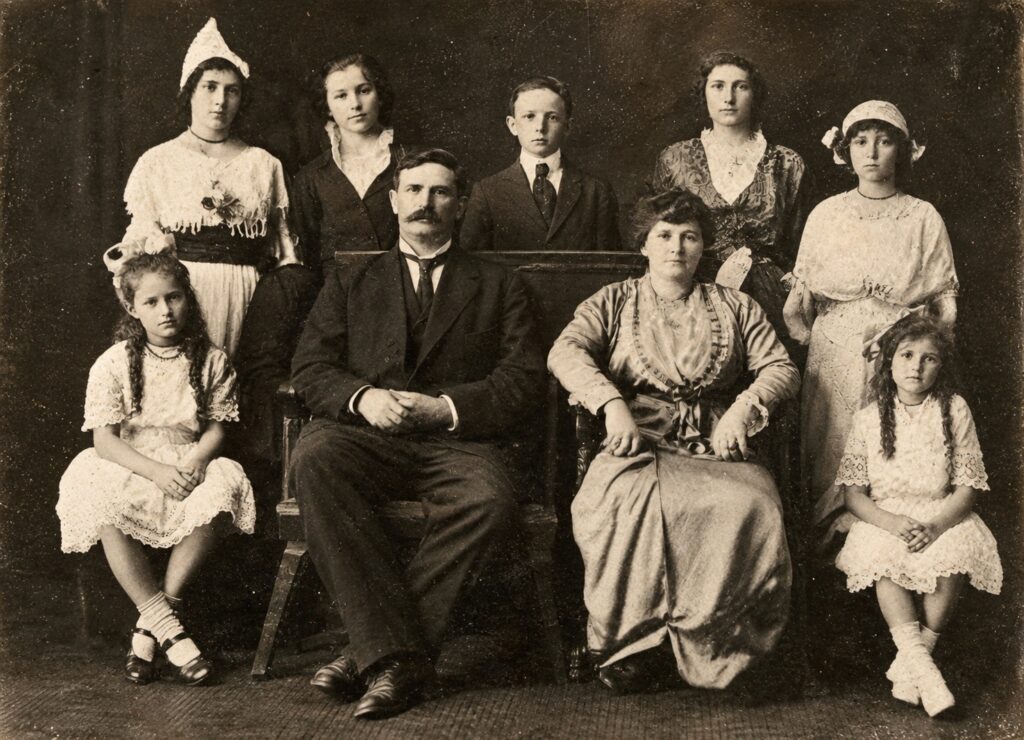
Some of the oldest homes along Mokulua Drive were built by people who shaped Honolulu itself. One of them was a Scottish-born contractor whose company name was once pressed into the city’s sidewalks.
From Scotland to Honolulu
John Walker was born in Scotland in 1859 and arrived in Hawaiʻi in the 1880s. His first job on record was as a plowman at Hakalau Plantation on Hawaiʻi Island. After a serious bout of typhoid fever he moved to Honolulu, where he spent nearly a decade with Theo H. Davies & Co., some of it in construction.
In 1895 he went out on his own as a stone and concrete contractor. The business he started eventually became Walker-Moody Construction, one of the longest-running construction firms in the islands.
“Working for John Walker”
Many of downtown Honolulu’s early concrete sidewalks were poured by Walker’s crews, and each section carried the company name. That gave rise to a local joke: a man out of work and walking the streets looking for a job was said to be “working for John Walker,” because he was pounding his sidewalks.
Bigger jobs followed. In 1905 the Territory hired him for public works that included the Alakea Slip in Honolulu Harbor. In 1907 he was contracted to build a new royal tomb for Queen Liliʻuokalani, her family and several past kings, finished in 1910.
Concrete that looks like lava rock
Starting in 1911, Walker’s company made a decorative concrete block with a rough, lava-like face, formed by hammering the molds before the concrete was tamped in. You can still see it at Sacred Heart Church on Wilder Avenue (1914) and the Hawaii Building on Bethel Street (1924). In 1923 he also patented a multiple-tile mold, a core lifter and a mortar gauge for hollow-tile masonry.
A beach house on Mokulua Drive
When Lanikai was still mostly open sand and scrub, the Walkers built a modest one-story craftsman bungalow on a beachfront lot at the northern end of the neighborhood. It has a hipped roof, a small dormer on each side, and walls of vertical wood boards. The porch walls and columns are built from Walker’s own textured concrete block, so the house quietly carries his trade.
On August 28, 2015, the John Walker Beach House was added to the Hawaiʻi Register of Historic Places. The listing recognizes both its tie to Lanikai’s early development and its craftsman style.
John Walker’s hibiscus breeding and horticultural legacy
John Walker’s creativity extended well beyond construction. He was a dedicated horticulturist and prolific hibiscus hybridizer. The historic nomination for his Lanikai beach house credits him with approximately 2,500 of the 6,000 hibiscus varieties reported to exist at the time of his death in 1928. His breeding work took place over many years at the family’s King Street home in Honolulu and on a lot beside his company’s offices.
Among his notable achievements was a double white hibiscus, described in the historic documentation as a milestone for hibiscus growers. Through years of crossing and cultivating plants, he developed an extraordinary range of new flowers.
His great-granddaughter, Nini Rainalter Maxey, recalls the family’s account that Walker named hibiscus varieties after his daughters. She also remembers him through family history as a champion horticulturist and a highly respected flower-show judge whose expertise was sought across Hawaiʻi—then the Territory of Hawaiʻi. These recollections connect his gardening accomplishments with the family whose beach house remains part of Lanikai’s history.
Historical reference: John Walker Beach House historic nomination, Section 8, page 14. Family recollections about variety names and judging: Nini Rainalter Maxey, John Walker’s great-granddaughter, shared October 2026.
The house is a private home. Please admire it from the street or the public beach paths.
Sources: State Historic Preservation Division, John Walker Beach House nomination; Hawaiʻi DLNR, Hawaiʻi Register additions, October 2015; Historic Hawaiʻi Foundation.