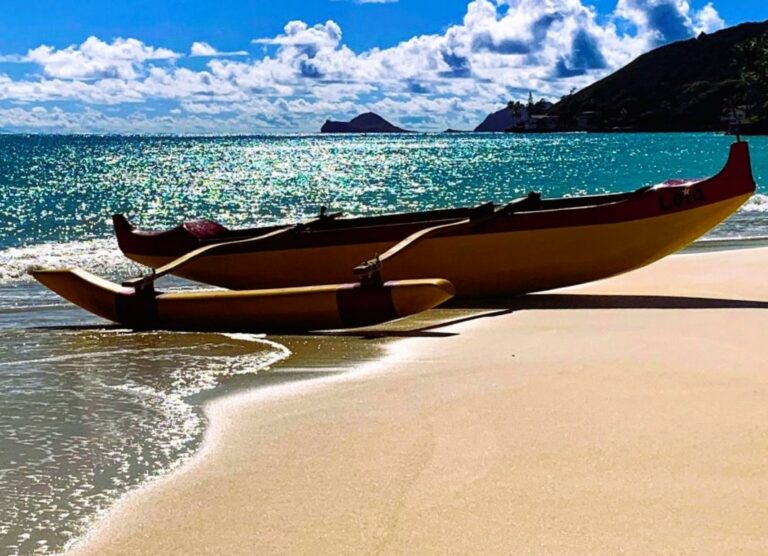
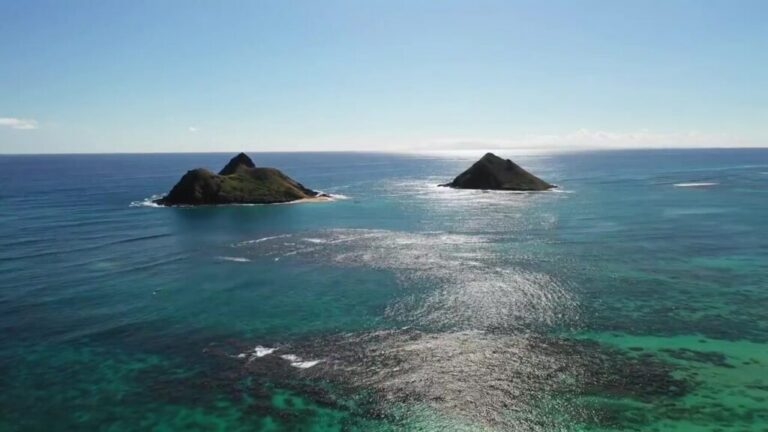
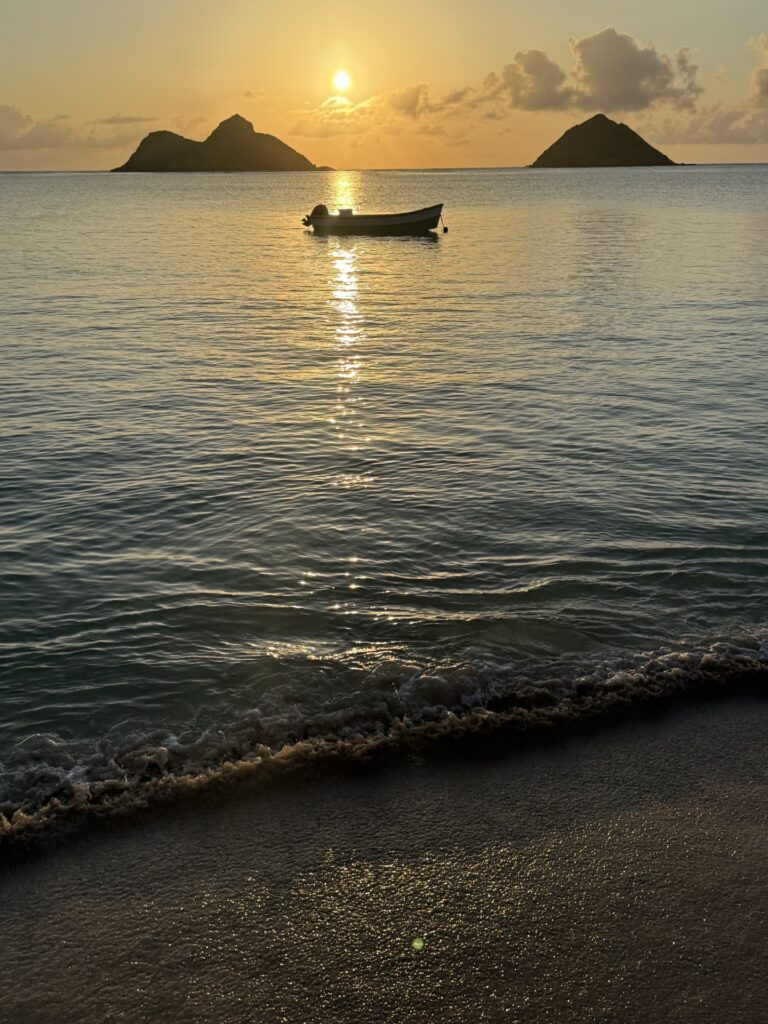
The sun comes up out of the ocean right behind or beside the Mokes, depending on the season. In winter it rises farther south; in summer, farther north. Get there about 20 minutes early for the best color.
Bring a headlamp for the lane, keep voices low, and skip the flash. You’re standing in front of people’s bedrooms.
After dark
Moonrise over the water
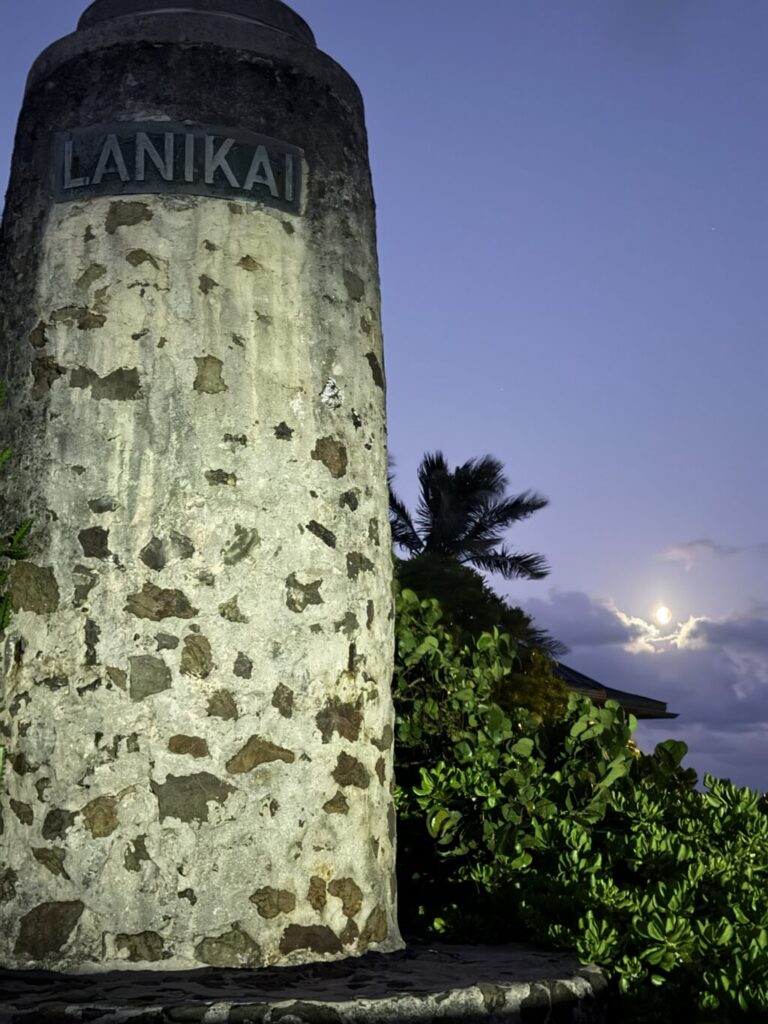
On full-moon nights, the moon lifts out of the Pacific just after sunset and lays a silver path across the bay. It’s one of the quietest, loveliest things to see here.
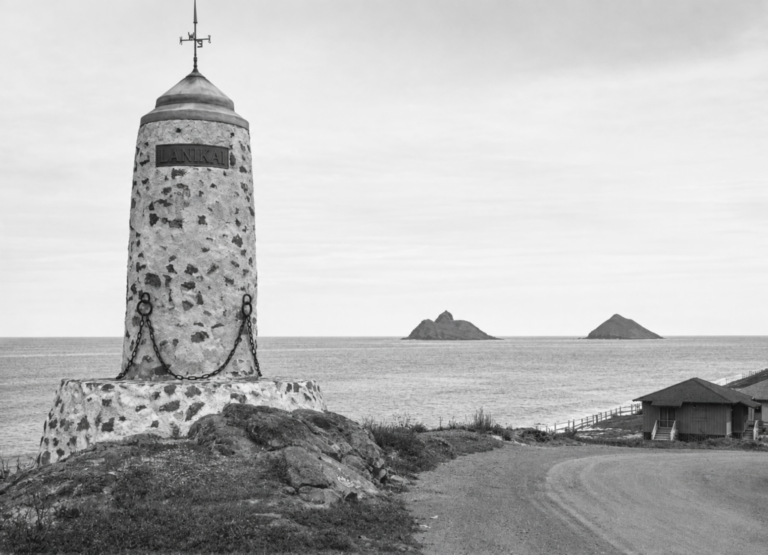
This shot is from the lunar eclipse of August 27, 2026, with the 1925 Lanikai Monument in the foreground.
Eclipse moonrise over the Lanikai Monument, August 2026.
North end
Alāla Point
The high ground at the entrance to Lanikai, near today’s monument, was once known as a fishing shrine: a natural rock feature rather than a built temple. Fishermen used it together with Wailea, at the far end, as a sightline to find good fishing grounds offshore.
South end
Wailea Point
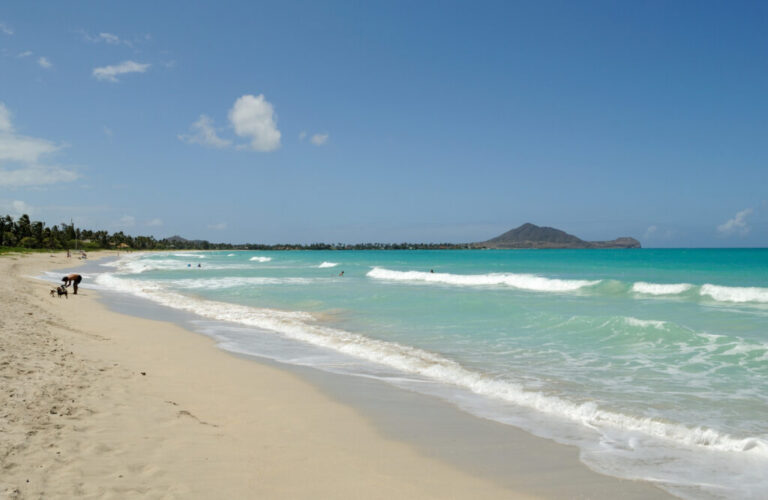
At the Waimānalo end of the neighborhood, Wailea Point was the partner shrine to Alāla. A small stream of the same name once reached the sea nearby, and it was remembered as a place where fish gathered.
Background: Elspeth P. Sterling and Catherine C. Summers, Sites of Oahu, Bishop Museum, 1978. Please view both points from public areas only.
Planning a visit?
Before you go
Read the parking and etiquette basics first, and if you plan to spend the night, our notes on choosing a legal, neighborhood-friendly place to stay.